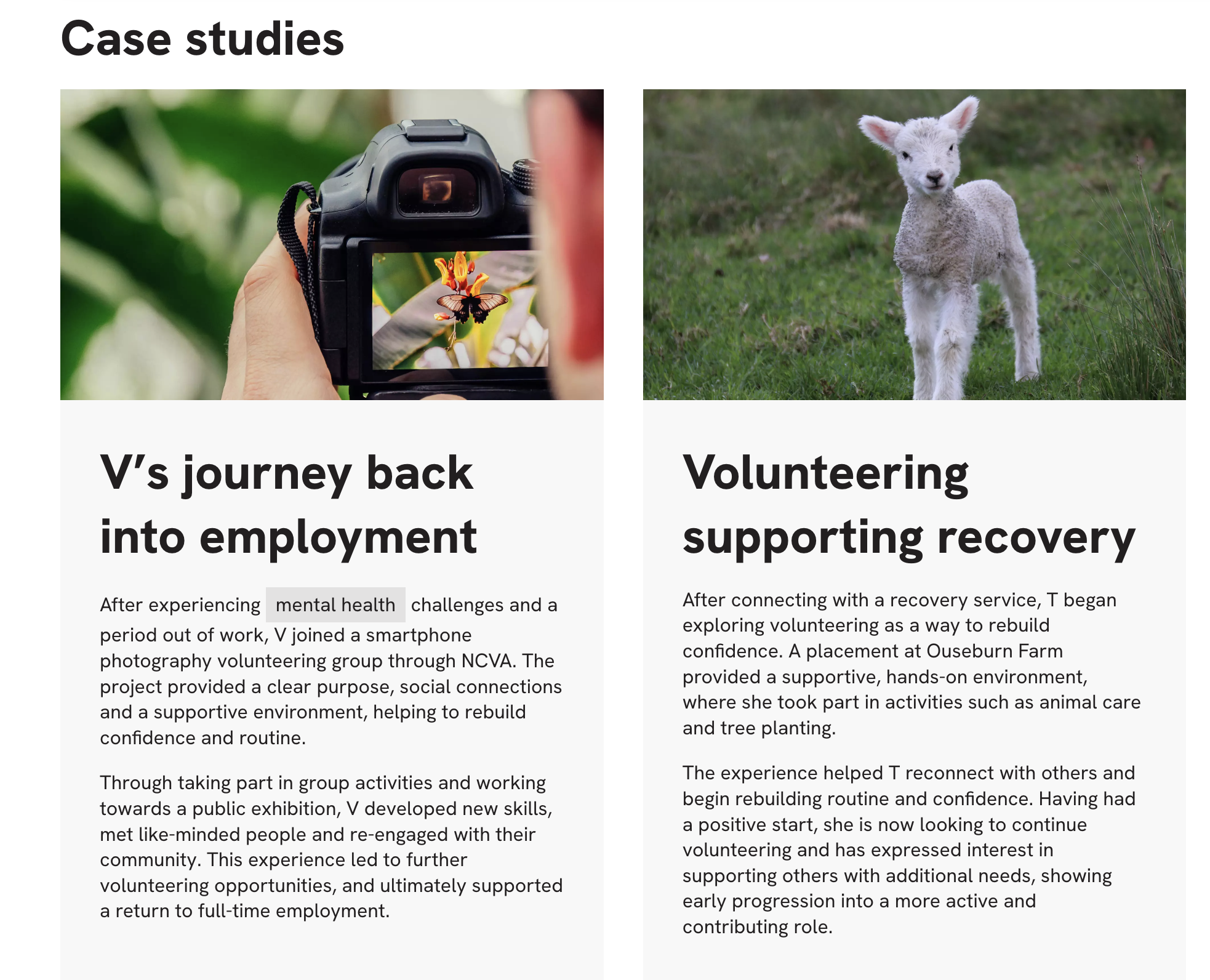
Click to visit the North East Evidence Hub
We are delighted that two of our evaluations of the UKSPF Volunteering and Social Action Project have been featured on the North East Evidence Hub.
The Evidence Hub, run by the North East Mayoral Strategic Authority, has published dedicated online pages for both the interim evaluation and the final evaluation of this work. Importantly, this is not just a case of uploading PDFs to a website. The Evidence Hub has created clear, accessible summaries of the reports, drawing out headline findings, case studies, conclusions, recommendations and wider learning.
For Goodlabs, this feels like a milestone moment. It is recognition of the value of careful, independent evaluation, but more importantly, it helps bring regional attention to the work of voluntary sector infrastructure organisations and the role they can play in supporting inclusion, participation and economic renewal.
The project itself was funded through the UK Shared Prosperity Fund, via what was then the North East Combined Authority and is now the North East Mayoral Strategic Authority. It was delivered across Newcastle, North Tyneside and Northumberland by a partnership of voluntary sector infrastructure organisations: VODA, Connected Voice, Volunteering Matters, Community Action Northumberland, CVA Blyth Valley, Northumberland CVA and The Key.
The real credit belongs to those organisations. It was their vision, commitment and practical delivery that produced the results. Working with a wide range of grassroots local organisations, they created volunteer opportunities, supported volunteers, delivered training, developed social action projects and built the trusted relationships that made the work possible.
Goodlabs’ role was to journey with the partners, acting independently as a critical friend to make sense of the evidence and offer practical recommendations about how to strengthen consistency and enhance impact. That involved listening carefully, analysing data, conducting focus groups and interviews, drawing together case studies, testing the findings and setting the work in a wider policy context.
At the heart of the research was an important question: what happens when people facing all sorts of personal barriers — isolation, economic inactivity, low confidence, distance from the labour market and more — are supported into volunteering and social action?
The final evaluation was titled From Inactivity and Isolation, to Involvement and Integration. That phrase captures the human journey at the centre of the work.
Volunteering is not a magic route into employment, and it should never be reduced to a narrow employability intervention. But the evidence from this project is important. Supported volunteering can help people move from inactivity and isolation towards involvement, confidence, connection and, in some cases, work.
Across the two phases of the project, the combined delivery figures were striking:
856 volunteer opportunities were supported, 769 volunteer roles were filled, 335 organisations received support and 534 people took part in training.
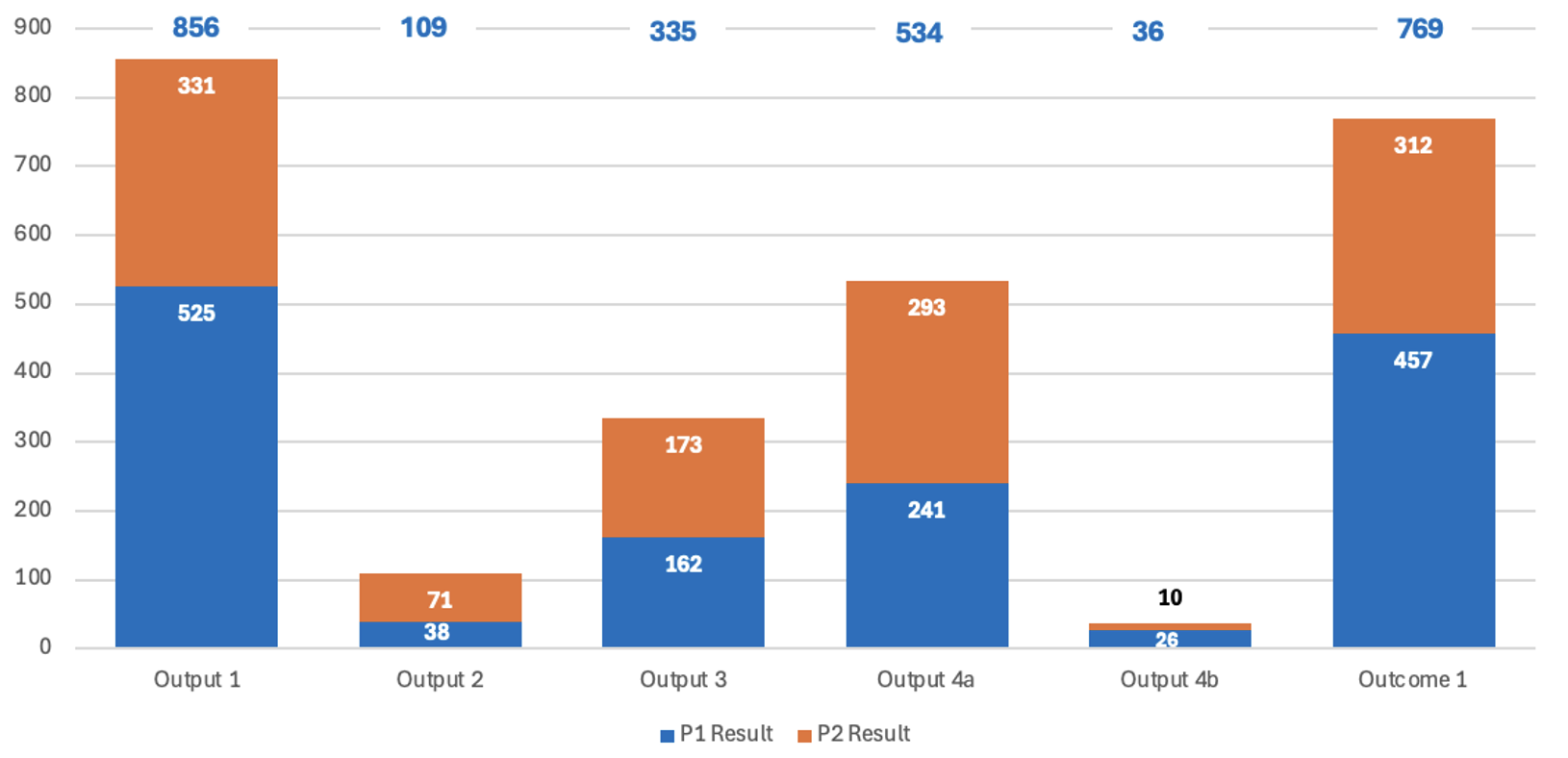
Combined results across the two phases of the project
Behind those numbers is the more human story captured in the title of the final report: people moving from inactivity and isolation towards involvement and integration. For some, that meant rebuilding confidence. For others, it meant reconnecting with people, developing routine, finding purpose, learning new skills or taking steps towards wider participation in community and economic life.
The final evaluation also landed at an important moment. As the UKSPF programme came to a close, the Combined Authority was setting out its strategic priorities through a new Corporate Plan. The evaluation found clear alignment between the Volunteering and Social Action Project and the region’s wider ambitions around inclusive growth, employment, skills and economic participation, including the New Deal for North East Workers.
In that context, the evaluation was not only a reflection on programme delivery. It was also a contribution to the region’s wider evidence base about the role and capability of the voluntary and community sector in creating inclusive pathways into participation and work.
This project shows why voluntary sector infrastructure matters. Local infrastructure organisations are often the connective tissue of the voluntary and community sector. They support smaller organisations, strengthen governance, improve volunteer systems, create opportunities and help people and communities take part.
That work can be quiet, relational and difficult to measure. But it is also foundational.
One of the key conclusions of the final evaluation was that the question is no longer simply whether supported volunteering can work. The evidence shows that it can. The bigger question is how fully it can be integrated into the region’s wider approach to employment, skills, health, community wellbeing and inclusive economic growth.
That is exactly the kind of bridge Goodlabs aims to build: between funders and delivery organisations, between evidence and practice, and between the voluntary sector and the policy conversations that affect its future.
Most importantly, this is a chance to recognise the organisations that made the project happen. Their work demonstrates the value of sustained investment in volunteering infrastructure and the powerful role that supported volunteering can play in helping people move from isolation towards confidence, connection and contribution.
Goodlabs is proud to have played a part in helping that learning reach a wider audience. Seeing the evaluations presented so thoughtfully by the North East Evidence Hub is a very proud moment — and a welcome recognition of the regional importance of the work led by the project partners and the wider voluntary sector infrastructure they represent.
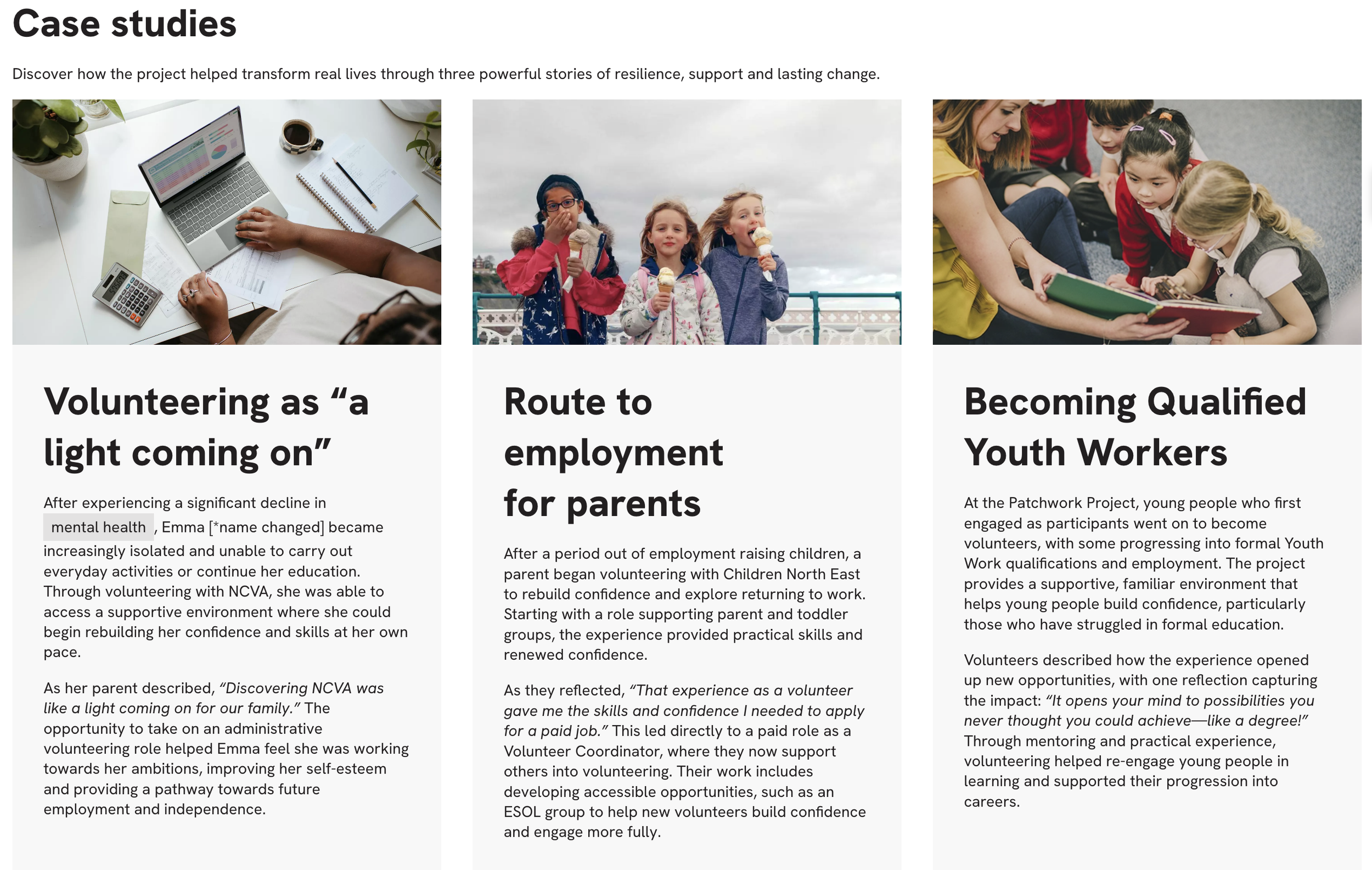
Click to view on NE Evidence Hub