Viewing entries tagged
evaluation

Goodlabs' evaluations featured on North East Evidence Hub

Click to visit the North East Evidence Hub

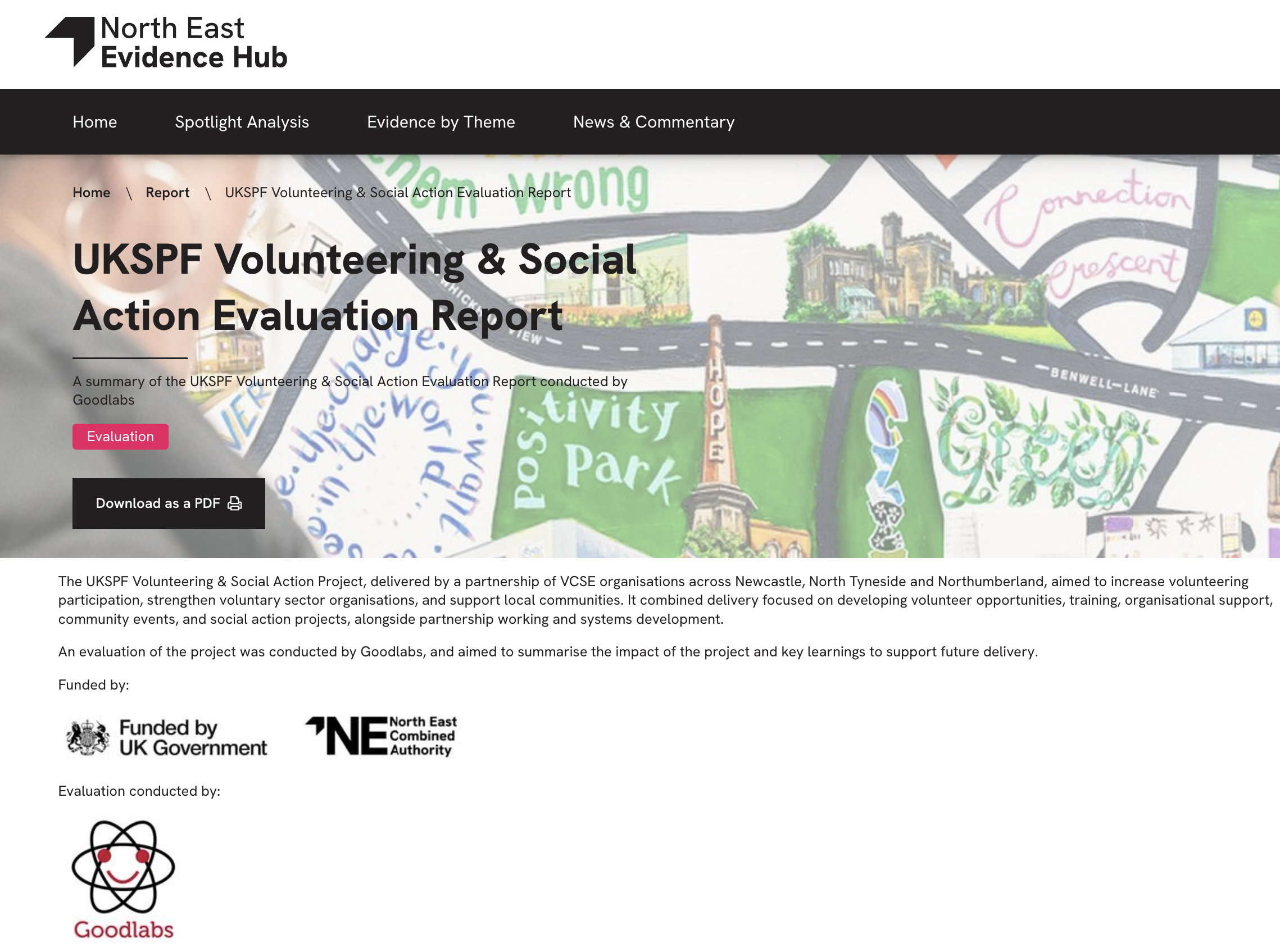
We are delighted that two of our evaluations of the UKSPF Volunteering and Social Action Project have been featured on the North East Evidence Hub.

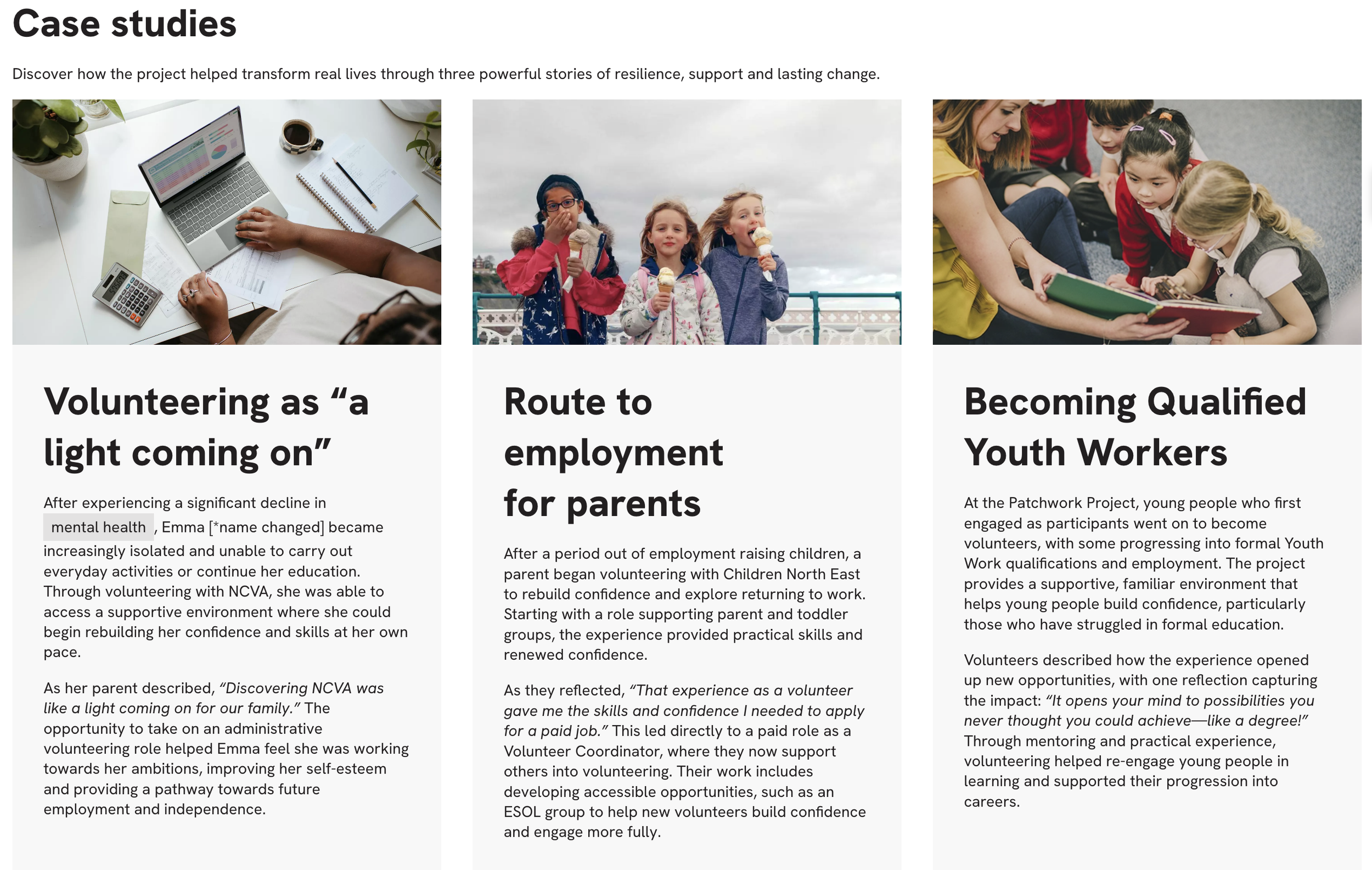
The Evidence Hub, run by the North East Mayoral Strategic Authority, has published dedicated online pages for both the interim evaluation and the final evaluation of this work. Importantly, this is not just a case of uploading PDFs to a website. The Evidence Hub has created clear, accessible summaries of the reports, drawing out headline findings, case studies, conclusions, recommendations and wider learning.

For Goodlabs, this feels like a milestone moment. It is recognition of the value of careful, independent evaluation, but more importantly, it helps bring regional attention to the work of voluntary sector infrastructure organisations and the role they can play in supporting inclusion, participation and economic renewal.

The project itself was funded through the UK Shared Prosperity Fund, via what was then the North East Combined Authority and is now the North East Mayoral Strategic Authority. It was delivered across Newcastle, North Tyneside and Northumberland by a partnership of voluntary sector infrastructure organisations: VODA, Connected Voice, Volunteering Matters, Community Action Northumberland, CVA Blyth Valley, Northumberland CVA and The Key.

The real credit belongs to those organisations. It was their vision, commitment and practical delivery that produced the results. Working with a wide range of grassroots local organisations, they created volunteer opportunities, supported volunteers, delivered training, developed social action projects and built the trusted relationships that made the work possible.

Goodlabs’ role was to journey with the partners, acting independently as a critical friend to make sense of the evidence and offer practical recommendations about how to strengthen consistency and enhance impact. That involved listening carefully, analysing data, conducting focus groups and interviews, drawing together case studies, testing the findings and setting the work in a wider policy context.

At the heart of the research was an important question: what happens when people facing all sorts of personal barriers — isolation, economic inactivity, low confidence, distance from the labour market and more — are supported into volunteering and social action?

The final evaluation was titled From Inactivity and Isolation, to Involvement and Integration. That phrase captures the human journey at the centre of the work.

Volunteering is not a magic route into employment, and it should never be reduced to a narrow employability intervention. But the evidence from this project is important. Supported volunteering can help people move from inactivity and isolation towards involvement, confidence, connection and, in some cases, work.

Across the two phases of the project, the combined delivery figures were striking:
856 volunteer opportunities were supported, 769 volunteer roles were filled, 335 organisations received support and 534 people took part in training.
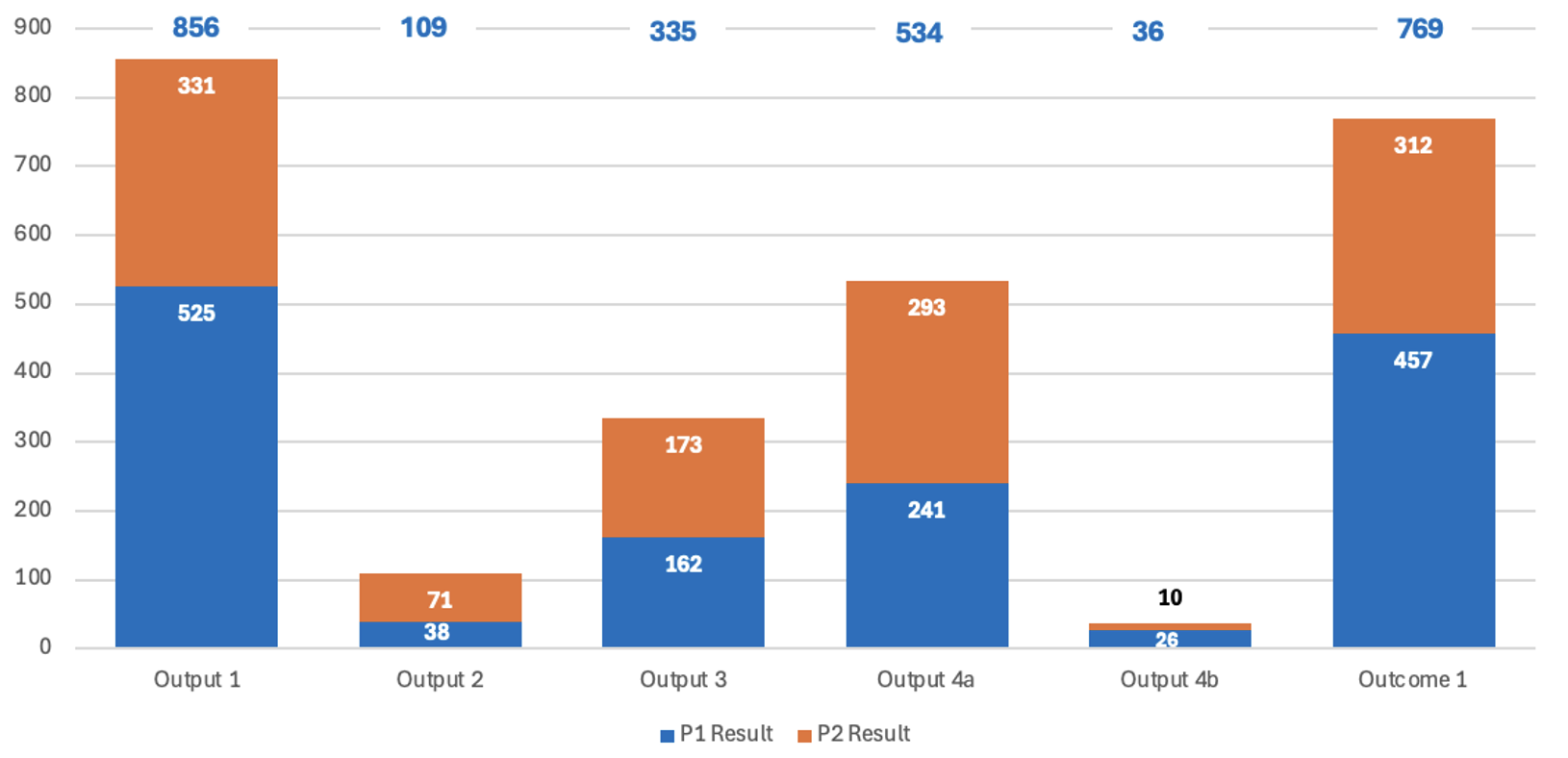
chart of outcomes

Combined results across the two phases of the project

Behind those numbers is the more human story captured in the title of the final report: people moving from inactivity and isolation towards involvement and integration. For some, that meant rebuilding confidence. For others, it meant reconnecting with people, developing routine, finding purpose, learning new skills or taking steps towards wider participation in community and economic life.

The final evaluation also landed at an important moment. As the UKSPF programme came to a close, the Combined Authority was setting out its strategic priorities through a new Corporate Plan. The evaluation found clear alignment between the Volunteering and Social Action Project and the region’s wider ambitions around inclusive growth, employment, skills and economic participation, including the New Deal for North East Workers.

In that context, the evaluation was not only a reflection on programme delivery. It was also a contribution to the region’s wider evidence base about the role and capability of the voluntary and community sector in creating inclusive pathways into participation and work.

This project shows why voluntary sector infrastructure matters. Local infrastructure organisations are often the connective tissue of the voluntary and community sector. They support smaller organisations, strengthen governance, improve volunteer systems, create opportunities and help people and communities take part.

That work can be quiet, relational and difficult to measure. But it is also foundational.

One of the key conclusions of the final evaluation was that the question is no longer simply whether supported volunteering can work. The evidence shows that it can. The bigger question is how fully it can be integrated into the region’s wider approach to employment, skills, health, community wellbeing and inclusive economic growth.

That is exactly the kind of bridge Goodlabs aims to build: between funders and delivery organisations, between evidence and practice, and between the voluntary sector and the policy conversations that affect its future.

Most importantly, this is a chance to recognise the organisations that made the project happen. Their work demonstrates the value of sustained investment in volunteering infrastructure and the powerful role that supported volunteering can play in helping people move from isolation towards confidence, connection and contribution.

Goodlabs is proud to have played a part in helping that learning reach a wider audience. Seeing the evaluations presented so thoughtfully by the North East Evidence Hub is a very proud moment — and a welcome recognition of the regional importance of the work led by the project partners and the wider voluntary sector infrastructure they represent.
Click to view on NE Evidence Hub
 

The Value of Cultural Education

We’ve been pleased to support the Northumberland Cultural Education Partnership through 2023 and 2024 with an evolving portfolio of work to evaluate its delivery work and explore its role and priorities going forward.

One of the most interesting strands of the work was to produce an external evaluation of a very interesting project involving hundreds of young people across a number of schools in the county. Whenever we undertake evaluation work we tend to have two things in mind. Firstly, we want to establish the extent to which the project has fulfilled its objectives and outcomes. Secondly, we hope that the reports we write might also become a resource for learning, made available to a wider network of stakeholders who have an interest in the subject matter, in this case, arts & culture education.

The project being evaluated was really fascinating as it included the use of a unique outcomes framework developed by the innovative arts charity Mortal Fools. Seeking to understand the links between arts participation and wellbeing the model, called ‘PERMA’ invited young people and teachers to reflect regularly on Positive emotion, Engagement, Relationships, Meaning and Achievement.

An enormous amount of data had been collected over the course of the project and a big part of our task was to analyse and interpret it. Presenting complex data in simple ways is something we consider very important at Goodlabs - it’s a running theme through most of our assignments. In this case we used ‘stock and flow’ charts to demonstrate the correlation between observations, highlighting distribution ranges as well as averages. The advantage of this approach is to be able to quickly see the general trend as well as any outliers.

If you’re having challenges understanding and communicating the story that your data is telling drop us a line, we’d love to help you get to grips with it.

North East Youth Alliance

Visualising the interconnected elements of the initiative

Goodlabs were appointed as external evaluators and learning partners to the North East Youth Alliance back in early 2022. We are just embarking on the third of our reports into the the progress being made by the initiative against its ambitious aims and objectives.

Whilst we operate across many different branches of the voluntary sector work with children and young people is a key area of strength and expertise within our overall portfolio of work. This reflects the experience of our MD, Matt Wilson, who spent the first two decades of his career involved in leading charities focused in this area. So it’s always exciting to be contributing to the development of new capacity and learning in this sector.

The North East Youth Alliance formed in 2021 with a 5-year £1 million funding award from the National Lottery Community Fund. Its overarching aims are visualised in the graphic above which shows how a change in culture is achieved by work undertaken in developing delivery and strengthening support. The project is being jointly led by two core partners, Youth Focus NE and NE Youth. Over 100 other organisations from around the region are involved as ‘allies’.

Our work over the next six months will involve pursuing several interconnected lines of enquiry gathering evidence of the impact being made in each of the three core themes shown in the model above. One of the advantages of journeying with a client over a period of years is the ability to develop a real depth of insight into what’s going on. A relationship of support and challenge can be developed with the key leaders and there is genuine opportunity to be a critical friend in the best possible sense of the phrase.

As we embark on this next chapter of the evaluation we’re looking forward to what the next few months will bring. Despite continued financial challenges for the youth sector across the UK there’s a very real sense that through the North East Youth Alliance new pathways are being created that show the way to a brighter and more sustainable future.

The Life and Soul of the Community

Creating community in New Lubbesthorpe

Evaluation of Lubbesthorpe Alive

Goodlabs has just completed a fascinating evaluation project focused on a brand new community being built on a 400 hectare site on the Western edge of Leicester.

New Lubbesthorpe is, in construction development terms, an Urban Extension. More recently the literature around Urban Extensions has begun to evolve to give greater acknowledgement to social and environmental concerns, alongside physical infrastructure requirements. This is very much the aspiration for developments like New Lubbesthorpe. The language is therefore evolving with the emergence of a new term: ‘Sustainable Urban Extension’.

Our task was to look back at the effect of a pioneering six-year project designed to accelerate the growth of real local community in the new housing estate. The new community was the vision of local landowner Fred Drummond. Mr Drummond, spoke of building a vibrant community on his 1000 acre (400 hectare) site. It would be a place that people would want to live, work, learn and play. Mr Drummond sadly died before he was able to see his dream become a reality but the Drummond Trust continue his legacy. Vital to the new community’s connection to the city of Leicester is a new road bridge over the busy M1 motorway. At its official opening the bridge was Christened “Fred's bridge” with engrave plaques at either end. There is also carved wooden fish in front of the Primary school as a memorial showing off his love of salmon fishing.

The lead organisation for the community development work was Churches Together in Leicestershire, which eventually developed a locally-operated nonprofit through which to operate: Lubbesthorpe Alive CIC. We found that a major contribution to the life of New Lubbesthorpe had been made, by connecting people to one another, as well as to the tapestry of places and spaces that make up their new home. 

Some of our key findings included:

  • Our residents’ survey showed that a genuine sense of community has been developed. 94% agreed that New Lubbesthorpe has a strong sense of community.

  • The value of making and maintaining strong partnerships. In this case with Blaby District Council, the Drummond Estate and the housebuilders (Redrow, David Wilson, Barratt).

  • Sustainable communities require key people and amenities to serve as the glue that bonds communities together. The promotion and facilitation of social interaction substantially enhances quality of life for residents.

  • New models of seasonal celebration have been important. Events marking festivals and seasons became important in the life and rhythm of the community. Demand has risen and crowds have got bigger. A culture of connection around these shared markers of the year is emerging.

  • Special concern and responsiveness must be shown to residents of new social housing units. A construction sector professional commented, "Our industry can be quite poor at anticipating the issues that tenants can bring to the community".

If you have a project that requires an external evaluation drop us a line to arrange a chat about it. Email: impact@goodlabs.uk

Empowering communities in Northumberland

Evaluating the impact of charity services and community programmes has become an important aspect of Goodlabs’ offer over the last couple of years. Sometimes we handle evaluations in-house and on other occasions team up with other evaluators. This month we commenced a new partnership project with Asset Based Consulting and Helme Park. Together we’ll be evaluating one of the most innovative new public health projects taking place in the North East: the Empowering Communities project, working across Northumberland.

The joint initiative from Northumberland County Council and Northumbria Healthcare NHS Foundation Trust is rooted in the theory of Salutogenesis: an approach the focuses on the factors that make us well, rather than those that make us ill.

amble-boats.jpg

Trevor Hopkins brings exceptional insight to the team having written extensively on the subject of Asset Based Community Development in recent years. Simon Penhall is well respected for his work in the arena of Theory of Change. Goodlabs will be contributing substantially to a series of ‘Lab’ events through which VSCO’s will be consulted, as well as assessing the effectiveness of a new ‘Asset Mapping’ technology that will be rolled out through the project.

Evaluating support to Adult Carers

ACES cover.png

The Big Lottery is the UK’s largest community funder with annual grant-making in excess of £500million per year to over 10,000 grant recipient organisations. As such, ensuring that its money is well-spend and making an impact is hugely important.

Goodlabs were appointed to evaluate the impact of a substantial three-year grant given to North Tyneside Carers Centre in support of their work with Adult Carers. A carer is anyone who cares, unpaid, for a friend or family member who due to illness, disability, a mental health or substance misuse problem cannot cope without their support. Many carers struggle alone and do not know their rights or that help is available to them. Taking on a caring role can mean facing a life of poverty, isolation, frustration, ill health and depression.

Our evaluation looked at the full range of support activities being provided to Adult Carers and included interviewing staff, volunteers, beneficiaries and professional stakeholders. There was also the task of scrutinising, assessing and interpreting 3 years worth of management data relating to over 1000 clients.

We were pleased to report that NTCC exceeded the overall numbers of carers that it hoped to reach and that the ACES project achieved its goals in each of its four key outcome themes. Lessons learned over the course of the project were included in our final report, along with a number of strategic recommendations for the future to further strengthen organisational capacity.

Conducting evaluations is a growing part of our work at Goodlabs. Please do get in touch if you’d like us to tender for proposal work that you might have coming up: evaluation@goodlabs.uk