Viewing entries tagged
cimplify

Data Security Assurance

Keeping charity CRM data secure: what recent events remind us

Recent cybersecurity incidents affecting technology providers used by UK charities have understandably prompted renewed discussion about how charities protect the information they hold.

They are also a useful reminder that security is never something a technology supplier can simply declare “finished”. Systems, threats and working practices change, and security arrangements need to evolve with them.

At Goodlabs, recent events have prompted us to look again both at the way Cimplify is structured and at some of the permissions we routinely provide to users.

Security starts with the way the system is built

Cimplify is built entirely on the Salesforce platform.

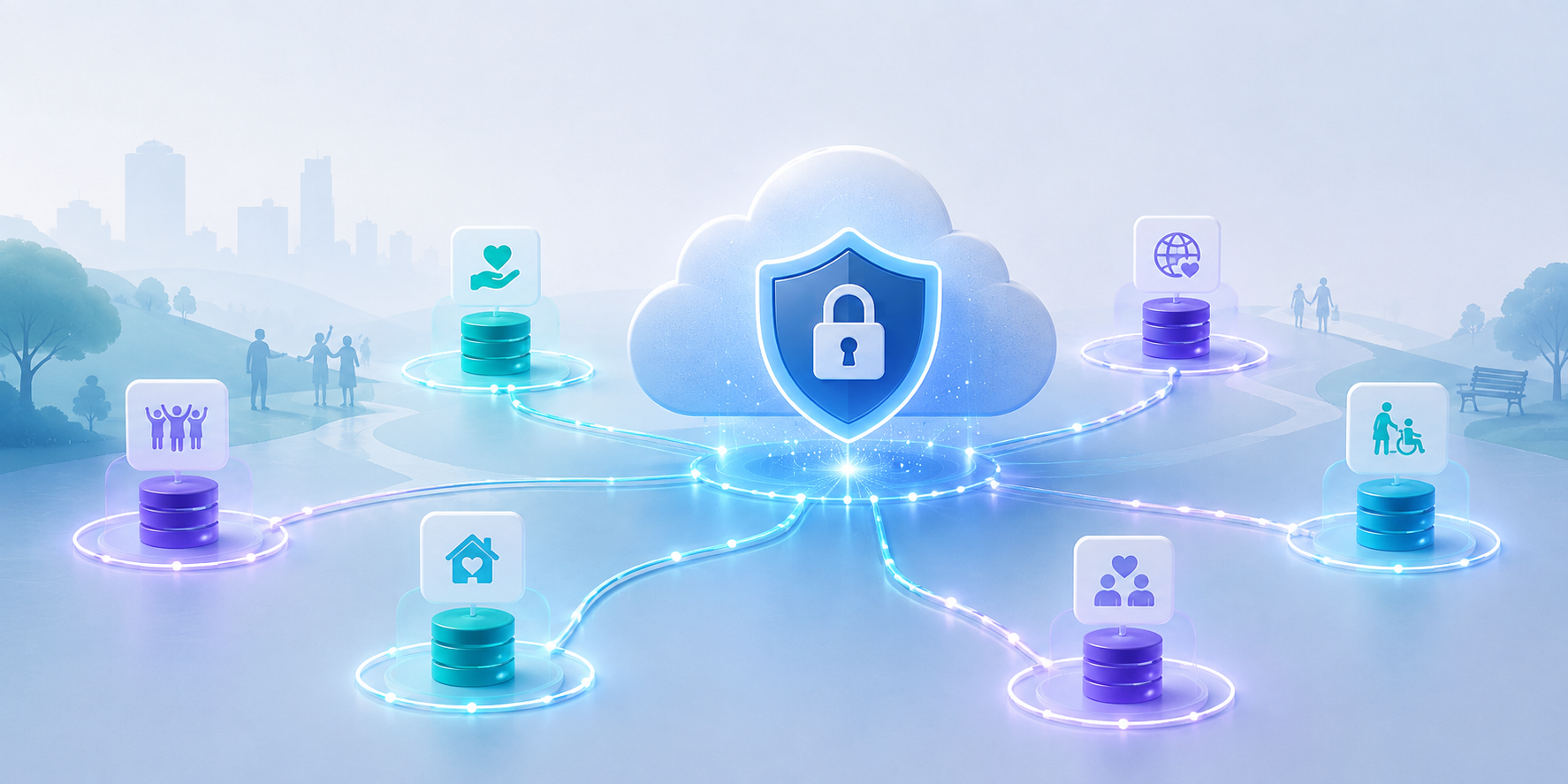
Each Cimplify customer operates in its own separate Salesforce environment, with its own users, permissions and access controls. Goodlabs does not operate a central database containing information from all of its customers, and there is no single Goodlabs login or access key that provides access to every Cimplify system.

That separation matters.

A key principle of good security is limiting the potential impact of any individual account or system being compromised. Access to one customer's Salesforce environment does not automatically provide access to another customer's environment.

Goodlabs also does not routinely download or store copies of customer CRM databases on its own servers or devices. Cimplify data remains within the Salesforce platform.

Where Goodlabs needs administrative access for support or maintenance, access is established individually for the relevant customer environment and is protected using strong, phishing-resistant authentication, including biometric passkeys.

Salesforce provides the underlying infrastructure

Building Cimplify on Salesforce also means that Goodlabs does not need to build and maintain its own database hosting, backup infrastructure or cloud security environment.

Salesforce provides the underlying infrastructure on which Cimplify operates, including the controls used to protect customer environments, manage availability and secure data.

Goodlabs' role is different. We are responsible for the way Cimplify is designed and configured, the permissions we provide, and the way we access customer systems when support is required.

Customers have an important role too, particularly in deciding who should have access to their CRM and ensuring accounts and permissions remain appropriate when people's roles change.

Security is therefore a shared responsibility between the technology platform, Goodlabs and the organisations using Cimplify.

Strong authentication for the most powerful accounts

Earlier this year, Goodlabs introduced stronger authentication requirements for administrator accounts across Cimplify customers.

For some users this meant changing an existing multi-factor authentication method, and we appreciate that this caused a little inconvenience. We are grateful to customers for working with us to make that change.

Administrator accounts warrant additional protection because of the amount of information and functionality available to them. Protecting these privileged accounts with phishing-resistant authentication significantly reduces one important route through which an attacker might otherwise gain access to a system.

But authentication is only one part of the picture.

What happens after somebody logs in?

Security discussions often focus on keeping unauthorised people out. Just as important is considering what an authorised account is capable of doing once somebody is logged in.

That matters for several reasons. An account might be compromised by an attacker, a user might make a genuine mistake, or access could potentially be deliberately misused.

The principle of least privilege says that users should have the access and capabilities they need to do their jobs, but no more.

This is an area Goodlabs continues to review across Cimplify.

Limiting unnecessary data exports

One important area is report exporting.

Salesforce reports are extremely useful for helping users understand and analyse information held in Cimplify. Being able to view a report, however, does not necessarily mean that a user also needs the ability to download potentially large quantities of the underlying data into a spreadsheet.

For organisations holding sensitive information about beneficiaries, supporters, volunteers or staff, reducing unnecessary routes through which data can leave the CRM is a sensible precaution.

Goodlabs' approach is therefore to increasingly treat capabilities such as bulk data export as elevated permissions: useful and sometimes essential, but best provided to users who genuinely need them rather than simply being available by default.

Balancing security and usability

Security controls need to be proportionate.

Making a system so restrictive that people cannot do their jobs properly simply creates other problems, including the temptation to find insecure workarounds.

The objective is not to remove useful functionality. It is to move towards a model where potentially powerful permissions are provided because somebody needs them, rather than simply being available by default.

Security is an ongoing process

No CRM platform or technology provider can promise that a security incident will never occur.

A more meaningful approach is to continually ask how risks can be reduced, how access can be limited, and how the impact of an individual account or component being compromised can be contained.

For Cimplify, that includes separate Salesforce environments for each customer, strong authentication for privileged accounts, avoiding unnecessary copies of customer databases, and increasingly applying least-privilege principles to user permissions.

Recent events across the charity technology sector are a timely reminder to keep asking those questions.

Goodlabs will continue to review Cimplify's security arrangements as technology and risks evolve, while aiming to provide additional protection without compromising the practical day-to-day use of the system.
Integrating service-delivery and funder-reporting

Since Goodlabs became an official Salesforce Consulting Partner in 2025, demand for our CRM services has really taken off.

Interest in Cimplify, our Salesforce-based CRM solution for charities, has increased particularly quickly. More and more organisations are looking for a practical, affordable way to move away from scattered spreadsheets, outdated databases and disconnected systems — without taking on the cost or complexity of a fully bespoke CRM build.

Cimplify has been designed specifically for busy charities that need a system which works around real services, real teams and real people. A typical implementation now takes around 10–12 weeks, giving organisations a structured but manageable route into using Salesforce effectively.

Week in, week out, we are now managing multiple implementation projects at the same time. Recent projects have included work with an international women’s network in Brighton, addiction support and recovery charities in Cumbria and Reading, a project supporting women survivors of abuse to rebuild skills and confidence, a national mentoring charity, women’s health charities in Tyneside and the West Midlands, and several other charities with a wide range of service delivery models.

What these organisations often have in common is not a desire for complicated technology, but a need for better ways to manage relationships, referrals, activities, outcomes and reporting. They want a CRM that supports the way their staff actually work.

They also need systems that help them respond to the realities of charity funding. Many organisations are delivering multiple funded programmes at the same time, each with its own outputs, outcomes, monitoring requirements and reporting deadlines. When service delivery data and funding data sit in separate spreadsheets or disconnected systems, it becomes harder to show what has been delivered, who has benefited, and what difference the work has made.

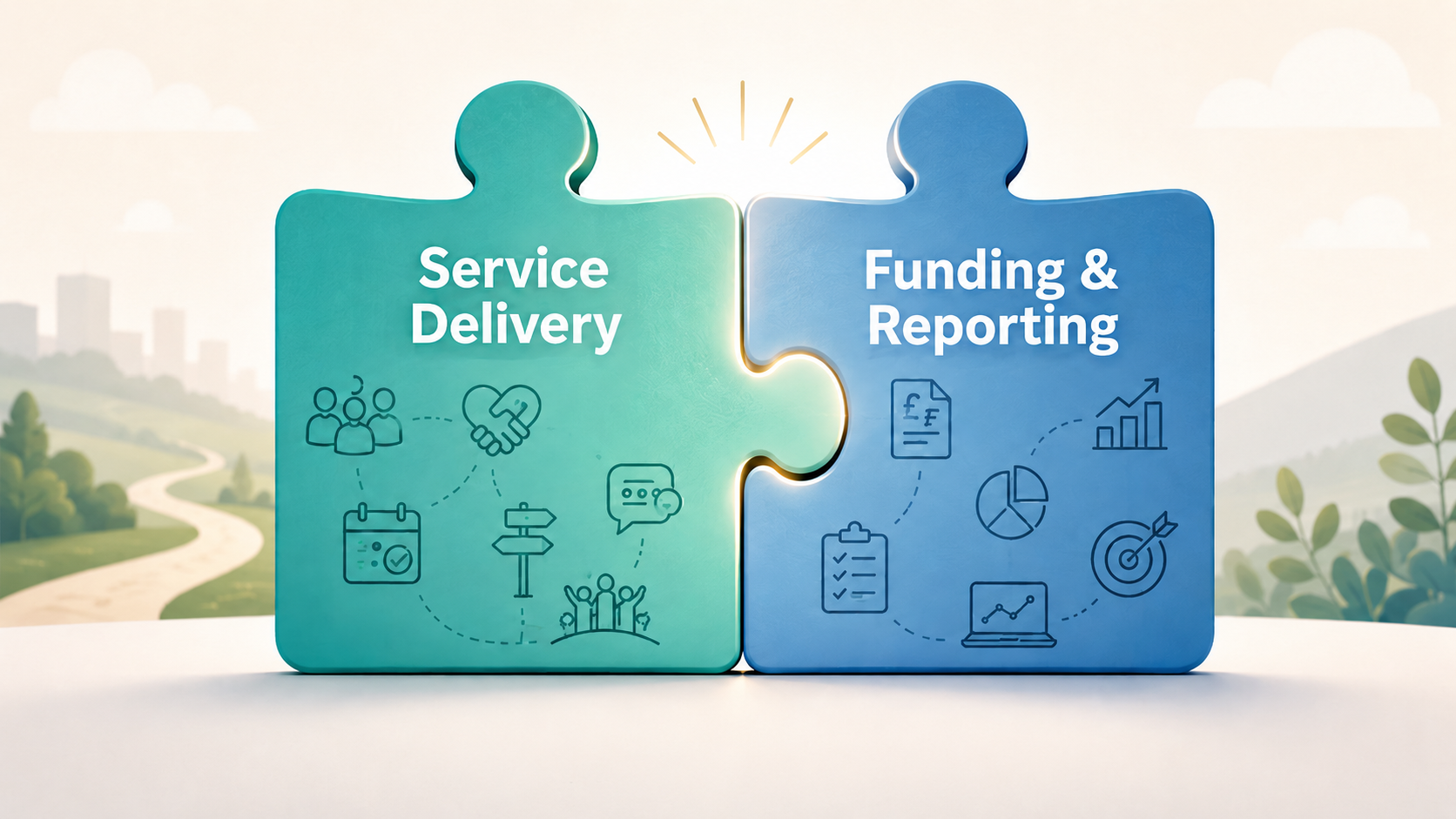
This is one of the reasons Cimplify is proving so useful. Because it is designed to support the day-to-day delivery of services — including the ongoing interactions between service users, staff and partner professionals — it helps organisations keep track of what is actually happening on the ground. That makes impact easier to evidence and report. It also means that funding requirements and contract delivery commitments are simpler to manage, because Cimplify brings together service delivery, outcomes and funder reporting within the same system, rather than treating them as separate silos.

New customers tell us they value Goodlabs’ can-do attitude, our ability to speak human rather than blind people with tech-speak, and the flexibility of Cimplify itself. Because Cimplify provides a strong, charity-focused starting point, it reduces both build time and cost whilst still allowing each system to be adapted to the specific needs of the organisation.

For us, becoming a Salesforce Consulting Partner has strengthened the work we were already doing: helping charities make better use of technology without losing sight of their mission, their people, their funders, or the communities they serve.

Smoother log in security for Cimplify

Logging in securely is very important, but it should not feel like a hassle every time you need to access your CRM.

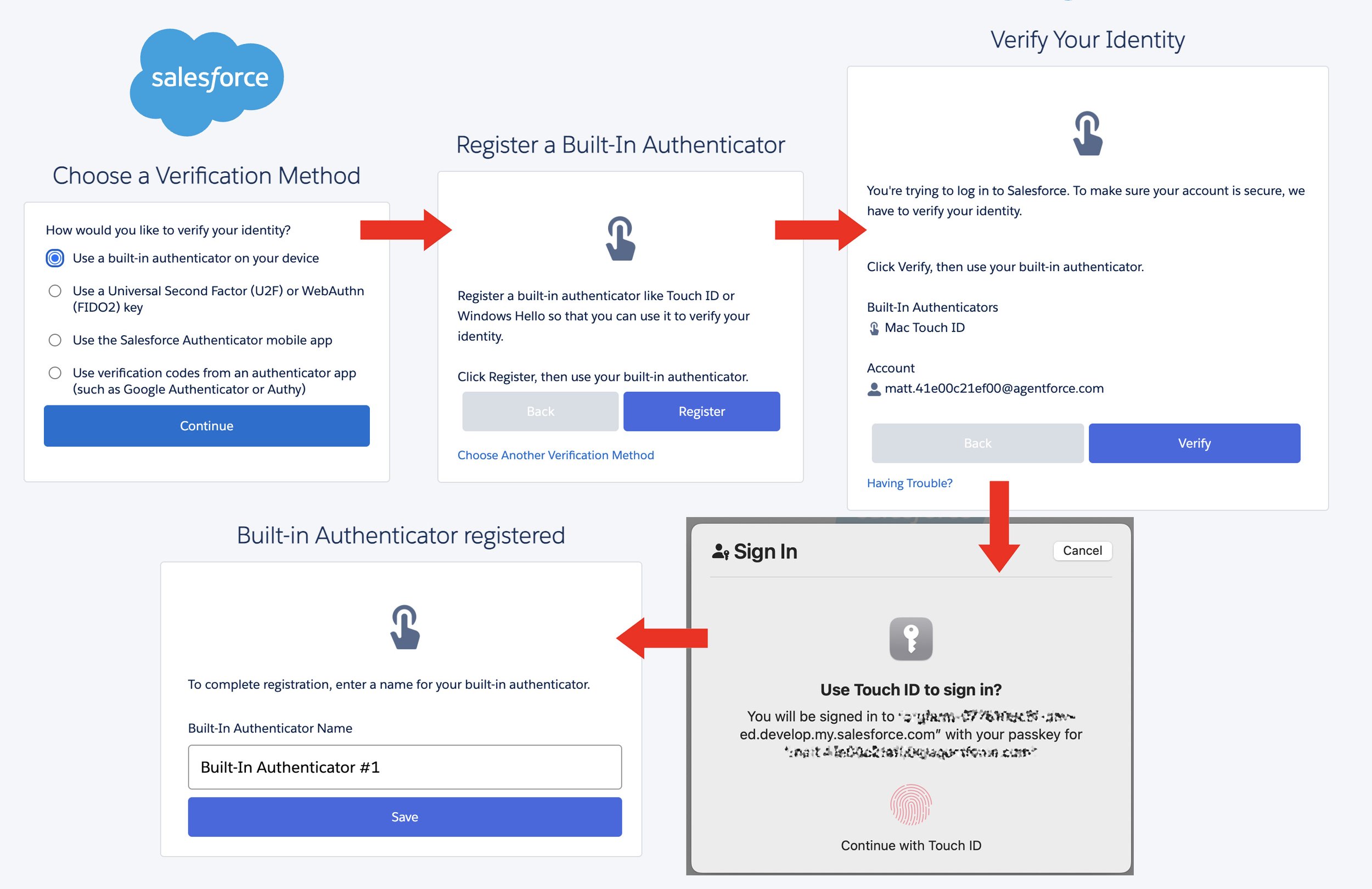
For Cimplify users, we have updated our login guidance to reflect a useful new option: it is now possible to use a built-in identity authenticator from your own device as part of Salesforce multi-factor authentication. In practical terms, this means that some users can now use familiar tools such as Apple Touch ID or Windows Hello, rather than relying on the Salesforce Authenticator app on a smartphone.

You can read the full step-by-step guide here: How to log in to Cimplify and set up MFA

Set up steps for the built-in authentication method

This is good news for many Cimplify users, particularly those who already use a work laptop with fingerprint, face recognition or device PIN security built in. For these users, the login experience can feel much smoother, because the extra security check happens directly on the device they are already using.

Multi-factor authentication is still doing the same important job: helping to protect your account if your password is ever guessed, stolen or exposed. The difference is simply that the second step can now be handled by your laptop or desktop device, rather than always needing a separate phone app.

The Salesforce Authenticator app remains a good option, and it is still the main method we can support in detail. However, we recognise that not every user wants to use a personal smartphone for work systems, and some organisations prefer to keep the login process centred on work-issued laptops. Where Apple Touch ID or Windows Hello is already available, this built-in option may be a better fit.

We have updated our Cimplify login and MFA guidance to include this new route. You can read the full step-by-step guide here:

How to log in to Cimplify and set up MFA

As always, the best option may depend on your organisation’s devices, policies and user preferences. But for many Cimplify users, this should make secure login feel a little simpler, quicker and more natural.

Supporting Those Who Served

We were delighted to support Veterans Outreach Support in Portsmouth as they recently went live with their new Cimplify CRM, built on the Salesforce platform.

The introduction came through our relationship with the Lloyds Bank Foundation, who support hundreds of community charities across the UK to become more effective and sustainable. Cimplify is one of only a small handful of CRM solutions that LBF are sufficiently confident in to fund directly on behalf of the charities they work with — something we’re incredibly proud of, and which speaks to both the robustness of our solution and its suitability for busy, mission-led organisations.

Starting from a Position of Trust and Understanding

We already had a good level of insight into the veterans sector, having worked with several veterans’ organisations previously. That experience meant we were able to get up to speed quickly, understand the context in which Veterans Outreach Support operate, and avoid some of the early discovery friction that can slow projects down.

This was particularly important as the project ran to a relatively short timeline. Fortunately, Veterans Outreach Support themselves had a very clear sense of what they wanted from the system and how it needed to work in practice. There was also something about the military mindset that meant the project management clicked into place almost immediately — roles were clear, decisions were made efficiently, and momentum was maintained throughout.

From start to finish, it was a highly focused and efficient implementation.

Key Requirements and Challenges

As with most real-world CRM projects, this wasn’t a simple “out-of-the-box” setup. Some of the key requirements we worked through together included:

  • A bespoke user security model, ensuring that system users could only access the data and records appropriate to their role and responsibilities within the organisation. This was critical given the sensitivity of much of the information being recorded.

  • Online registration and referral processes, delivered using Salesforce Experience Cloud functionality, allowing data to be captured securely and efficiently without adding administrative burden.

  • A comprehensive data migration, bringing together information from earlier recording and reporting systems into a single, coherent platform — doing away with paper records and multiple spreadsheets in the process.

Throughout, the focus was on building something practical, usable, and sustainable — a system that staff would actually want to use day-to-day, not just something that looked good on paper.

Looking Beyond Go-Live

What really stood out for us was the charity’s clear commitment to improving outcomes for their service users, and their openness to using better data to support that mission. The ability to quickly extract meaningful management information is already proving to be a major time saver, and the team can see the difference the system will make as it becomes embedded across the organisation.

The glowing feedback we received from VOS means a great deal to us:

“The support we received from Goodlabs has been first rate, giving us confidence and helping us refine our plans… We would not hesitate to recommend Goodlabs and Cimplify to any charity looking to improve the way they manage their beneficiaries and activities.”

Behind the People Who Make a Difference

We’re thrilled to be working with charities like Veterans Outreach Support — organisations that are deeply committed to the people they serve and serious about improving lives. Being trusted to support that work, quietly and competently behind the scenes, is what motivates us.

We love being the people behind the people who make a difference!

Ai 'Agents' are coming...

Goodlabs’ managing director Matt Wilson shares his thoughts about AI-influenced changes to the Salesforce brand and wider product offering

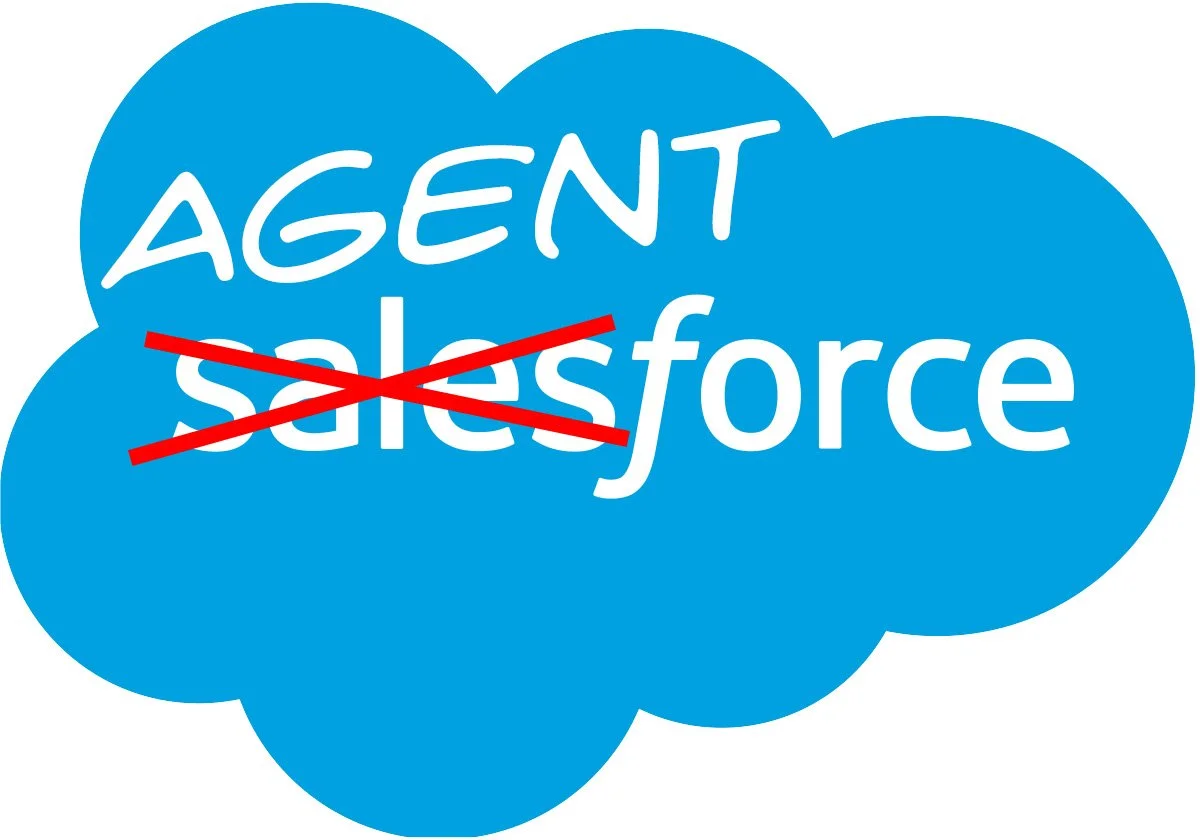
It’s corporate logo is a blue cloud with the word Salesforce in it. The brand presides over a huge range of interconnected digital data products, many with “cloud” in the title. But now many are being re-badged with “agent” instead — part of a serious pivot to AI. Recent articles circulating after this year’s Dreamforce, including one reporting Marc Benioff’s comment that he might even rename the company Agentforce, made me stop and think about what this could mean for the #nonprofit sector.

And why, despite my reservations about the terminology, I’m genuinely excited about what AI agents could mean for charities. I’ll share three reasons.

My business introduces lots of charities to Salesforce, largely because of its core CRM strengths and the generous discounts available for smaller organisations. But every time I demo the system to a new prospect, I have to start with: “Why would a charity be interested in a product with ‘Sales’ in its name?” I’d be quite happy not to have to do that any more.

That said, I’m not convinced that the words Agent and AI naturally go together in most people’s minds. There’s a real risk of confusion. But if we put the branding to one side, the underlying direction of travel is fascinating — because AI agents could genuinely reshape how busy charities manage and report on their services.

Here are three reasons I’m excited.

1. More human referral journeys
Referral pathways for people seeking help can be long, clinical, and complicated. AI agents could make them feel far more human. Instead of navigating complex forms, someone could describe their situation in their own words and be guided through a gentle, conversational process that captures exactly what a service needs. The same outcomes, but with greater dignity and far less friction.

2. Reporting that feels like insight, not admin
Salesforce reports and dashboards already help to reduce the stress around impact reporting — but the learning curve is still steep. AI could flatten it. Imagine asking, “Show me referral trends over the past six months and highlight anything unusual,” and receiving a dashboard, a narrative summary, and suggested next questions. Not replacing good measurement practice, but making it accessible to every organisation.

3. Training and support woven directly into the CRM
Many frontline workers don’t see themselves as ‘tech-confident’, and they shouldn’t have to be. AI assistants could sit within the CRM as a calm, patient guide: helping staff complete tasks, record interactions accurately, follow safeguarding steps, or simply remember where a field lives. Real-time support embedded in daily work, improving confidence and data quality simultaneously.

If Salesforce is serious about reframing its ecosystem around agents and AI, I hope our sector doesn’t just brace for the change — but sees the opportunity in it. Done well, these tools could help charities spend less time wrestling with systems and more time doing what they do best: supporting people.

Cimplify Support Plans for 2026

Our annual support plan options are changing for 2026

Support Plans – Important Changes

Download 2026 Support Plans Summary here

From 1 January 2026, we’re introducing the most significant overhaul of our support plans since Cimplify first launched. Our goal is to make our support options clearer, fairer, and more flexible – ensuring that you can access the right kind of help at the right time.

The key change is the introduction of a new midweight plan called Guide. This new plan fills the gap between our Buddy and Guru plans, giving you a more gradual sliding scale of support and the option to upgrade mid-year if your needs change.

Higher-level plans also offer discounted hourly rates, so it’s worth taking a few moments to consider which plan will suit you best when you renew.

We’re very happy to help you decide – we keep careful records of the support you’ve used so we can advise whether you’re reaching the threshold of your current plan, or perhaps not making full use of it.

Please reach out to us by email with any questions, and take a few minutes to read the attached document, which explains the new structure in detail.

A Powerful CRM For A Mighty Charity

The Kennedy Street mission

Small but Mighty: Implementing Salesforce for Kennedy Street Recovery

We’ve loved working with the team at Kennedy Street Recovery down in Brighton — a community-led charity doing incredible things to support people in recovery from addiction.

While they might be small in terms of staff headcount, but they really are mighty when it comes to impact. Kennedy Street is all about lived experience, peer support, volunteering, and building real community — and you can feel that energy in everything they do. From their peer-led recovery workshops to their daily Recovery Café, they’re creating spaces where people feel safe, supported, and seen. It's all about practical help, emotional connection, and hope — and it’s working. Lives are being rebuilt every day.

When they first came to us, Kennedy Street were using an old custom-built database that was no longer fit for purpose. To keep things ticking over, they were relying heavily on spreadsheets — which was far from ideal as a means of tracking complex journeys of change.

That’s where Cimplify came in — our Salesforce-based impact management system designed especially for charities. We worked closely with Mark and the team to customise the core application around their operating model — to deliver a solution that reflects the way they work and supports the brilliant things they’re already doing.

As Mark puts it:

"Working with Matt and Abi at Goodlabs to build, configure and implement our new Cimplify CRM has been a great experience. The attention to detail and consideration of the needs and nuances of our charity has been second to none. They coached us through the whole process from set up to training, and the support has meant that we are now really confident moving forward with using the system. I also know that if we get stuck they will be there to help, which is very reassuring. Cimplify itself is really intuitive and our team started using it on day one. I would definitely recommend Goodlabs and Cimplify."

Thank you, Mark! That means a lot.

It’s been a real pleasure to work alongside such a passionate and values-driven team. We’re looking forward to continue to support Kennedy Street in the years ahead.

Cimplify on-the-go!

Cimplify on-the-go!

Salesforce App – Stay Connected Wherever You Work

Did you know that you can also access Cimplify on the go via the Salesforce app which is available from the Apple App store and Google Play store.

Accessing Cimplify via the Salesforce mobile app empowers your team to manage beneficiary interactions effortlessly on the go, ensuring important updates and insights are always at your fingertips. With mobile accessibility, your charity can look up and record activities away from the desk—making your CRM system more flexible, responsive, and aligned with the realities of frontline charity work. The mobile app is ideal for youth groups, outreach services, or support meetings at community venues, you can:

  • Record Data Instantly: Take registers of group attendance or log client interactions in real-time.

  • Boost Productivity: Eliminate paperwork delays by entering and updating your data on-the-go.

  • Easy to Use: Intuitive design ensures even non-technical users feel comfortable and confident.

  • Secure and Reliable: Benefit from Salesforce's robust security while accessing Cimplify remotely.

The app is now available for free to all users with either full or platform licences.


Portal Access for Volunteers and Sessional Team

Do you involve volunteers or sessional workers in your charity's daily activities? Often, organisations want these valuable team members to complete simple yet important tasks—like logging attendance at support groups or recording mentoring sessions—without giving them full access to the entire CRM system.

Cimplify's new portal offers an effective solution:

  • Secure Individual Logins: Each volunteer receives their own secure login, managed easily by your admin.

  • Tailored Access: Volunteers only see the data relevant to their role—perfect for a volunteer group leader who interacts with specific beneficiaries.

  • Cost-Effective Pricing: From just £1/user/month.

  • Mobile Responsive: Access the portal smoothly from any device, anywhere.

Set-up is straightforward with affordable one-off fees, making it easy to expand secure access to your wider team without stretching your budget.

Interested in seeing how a portal could benefit your team? Send us an email to find out more.

Decisions, decisions...

We know that choosing a CRM product can be bewildering. There are lots of different products out there, each with their own strengths and weaknesses. To help steer you onto the right track take a few minutes to look over our Cimpl decision tree. It will help you make an initial assessment of whether our product should be added to your shortlist. And remember, we offer a live demo even if you’re still just browsing.

Complex Needs, Cimpl Data

Woman using charity CRM system

People can be complicated, but data shouldn’t be

A charity in the West Midlands recently asked for our support to transform their data management practices in relation to the recording of interactions with their clients. Their service users have multiple and complex needs, often relating to mental health, addiction, or both. A range of services are offered including 1:1 support, group work and also accommodation.

Through our Cimplify CRM solution for charities we were able to migrate them over to a more efficient and organised way of operating. No more client data hiding in Word documents hidden on Sharepoint, in Teams or even worse, on staff C drives. Now the whole team has role-related access to the clients relevant to their service. For management, reporting has been brought to life with realtime dashboards providing insight into service demand month by month. Clients presenting risks are more easily identified meaning that creating a safer environment for everyone.

The moral of the story is that whilst people may be complex, data can still be made Cimpl!

CRM for Veteran's Charity

Veteran's charity using CRM

Charities come in all shapes and sizes, serving all sorts of different groups in society. We were pleased to be asked to support a Veterans charity for the first time.

Veteran’s HQ Liverpool provides much-needed support to hundreds of ex-servicemen and women right across the Merseyside region. The leadership team of the charity and its committed volunteers were beginning to struggle to keep track of all the many diverse requests for support and a busy schedule of participation in a range of groups and activities.

Using our Cimpl CRM application which utilises the security and versatility of the Salesforce platform we were able to deliver a user-friendly and cost-effective solution. In order to ensure that new users to the system had the best possible start we travelled to Liverpool to deliver in-person training.

In particular the in-built report and dashboard features that Cimpl offers have transformed the way that the charity reports back to its various funders, really taking the sting out of producing detailed reports on activity and impact.

Don’t be shy to get in touch if you’d like a demo of how our Cimpl CRM could make a difference to the way your charity manages its data.

The Power of Messaging

Charity CRM messaging app

Cimpl has a new messaging partner: ValueText

We are always working on ways to improve our Salesforce CRM solution: Cimplify. One of the things we’ve been wanting to add for some time is an integrated messaging service as an alternative to email.

This requirement was really important for a new charity CRM client, a mental health charity based in North Wales. They need to keep in close contact with their service users as their 1:1 and group programmes tend to be quite dynamic. For their service users email is not a channel they use often for communication, but they all have mobile phones. Two-way chatting and also the ability to bulk message to a wide range of different lists was essential.

After testing a number of third party products we chose to go with ValueText. The quality of their solution, ease of use, great customer service and most of all highly competitive pricing (including a charity discount) made them stand out from the competition.

Having live tested this solution for several weeks we’re now really happy to offer it to all of our Cimplify customers who also wish to make the most of the power of messaging!